
Why can online music lessons suit autistic kids?
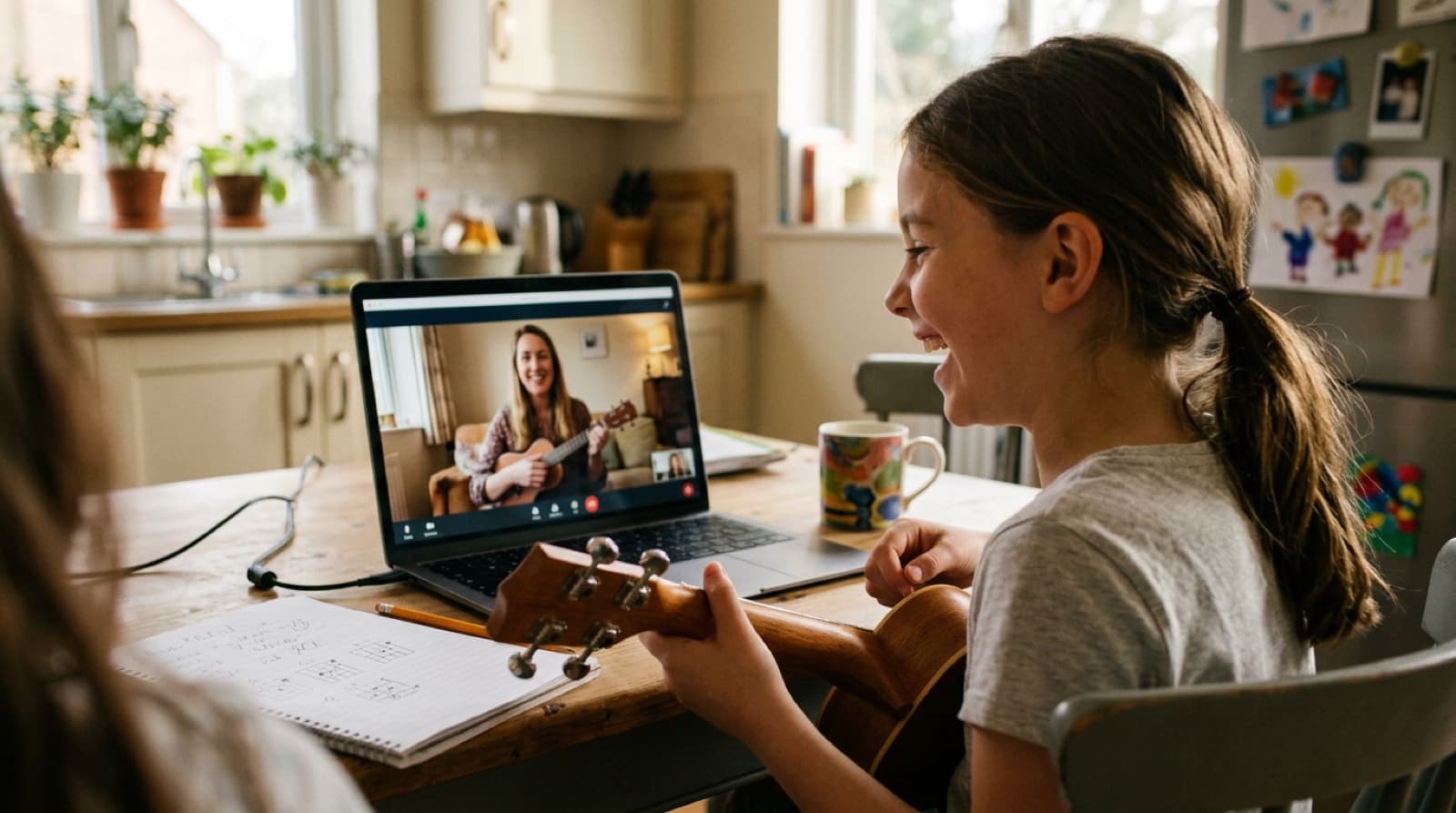
Online music lessons for autistic children happen at home, so there is no travel, no waiting room and no unfamiliar building. Your child sits in a room they know, with the volume, lighting and seating you control.
A live teacher still answers in real time, so the lesson can slow down, repeat or change course. We do not promise outcomes; we describe what the format makes easier to set up. Thoven offers online music lessons for kids ages 5 to 18, online only.
How do routine and predictability work in a live lesson?
The same day, time and spot each week gives the lesson a shape your child can count on. Ask the teacher to open and close every lesson the same way, for example a greeting, a warm-up song, the new piece, then a goodbye. A short written order of the lesson on paper nearby can help.
Agree the lesson order before the first lesson
Settle the order with the teacher up front, so your child knows what comes next.
Plan for changes and cancellations
Tell the teacher in advance about any change, such as a new piece or a rescheduled time, so it is not a surprise. Lessons can be rescheduled up to 24 hours ahead.
What is sensory pacing: sound, light, screen and movement?
Many families find that sound is the main thing to plan for. These are small choices a parent can ask about:
- A keyboard with a volume dial
- Headphones for the call
- A softer drum pad before a full kit
- A beginner violin teacher who warns about scratchy early sounds
Camera on or off for part of the lesson, a break card, and standing or sitting are all things to agree with the teacher. Every child is different, so start with what your child already tells you they like and dislike.
Which instrument might fit?
No instrument is right for every autistic child, so start with your child's own interests and sensory preferences. Try the instrument you already have at home, and use the intro call to test one.
Piano or keyboard
Piano or keyboard has a clear visual layout and a volume you can set. Explore online piano lessons.
Drums and percussion
Drums give a steady beat and physical movement, and a practice pad is quieter.
Guitar and ukulele
Guitar and ukulele can work, with their own sound and touch demands.
Voice and violin
Voice and violin can work too, with different sound and touch demands.
How do you brief a teacher?
A short note before the intro call saves the first lesson. Share what your child likes, what to avoid, how they say they need a break, how they prefer to be spoken to, and what a good lesson looked like in the past. Say whether your child uses a device, a visual schedule or short written steps.
What to share
Likes, things to avoid, how your child asks for a break and how they like to be spoken to.
What you do not have to share
Share only what you are comfortable sharing. You do not need to disclose a diagnosis to book.
A parent in the room or out of it
Parents are welcome to sit in, especially for younger children and in the first lessons. Some children prefer to have the room to themselves. Agree this on the free intro call.
What should you ask on a free intro call?
The intro call is free and has no commitment, so treat it as a test lesson for the fit. Notice how your child reacts to the teacher's voice and pace. Thoven does not make claims about any teacher's autism experience, so ask each teacher about their own and listen to the answer. Our guide to the signs of a good music teacher can help.
Questions about pacing
- How do you use short steps and repetition?
Questions about change and breaks
- How do you handle a lesson that is going off track?
- How do you handle a child who wants to stop?
Questions about communication with you
- How do you share what was covered?
How long should lessons be, and what does a good first month look like?
Most Thoven teachers offer 30, 45 or 60 minutes. A shorter lesson is a fine start, and you can move up later.
In the first month, look for a child who knows what happens in the lesson, plays something they chose, and is willing to come back. A quiet lesson is not a failed lesson. If it is not the right fit, you can explore other teachers and book another intro call.
What words does this guide use, and what are the lessons?
Many autistic self-advocates prefer "autistic child"; some families prefer "child with autism". This guide uses "autistic" and follows your family's words in the lesson.
Thoven offers live online music lessons with a real teacher. It does not offer health or developmental services, and this guide gives no health advice. Talk to your child's own professionals about their care.
Ready to book a free intro call?
Explore Thoven teachers, pick one or two who look like a fit, and book a free intro call. Bring your short briefing note and your questions. This one is a start:
- My child likes [songs, instruments, activities].
- Please avoid [sounds, wording or changes].
- They ask for a break by [how they signal it].
- They like to be spoken to [how].
Free printables and practice sheets for practice at home are on our free resources page. Families with a kid with ADHD can read music lessons for kids with ADHD.
Frequently Asked Questions
Can autistic children learn an instrument online?
Many can. Live one-on-one lessons happen at home, in a familiar room, with a teacher who can slow down, repeat and change the plan as the lesson goes. What matters is the fit between your child and the teacher. Use a free intro call to see how your child responds before you book any lessons.
Do Thoven teachers have experience with autistic students?
It depends on the teacher, and Thoven does not make a site-wide claim about it. Every Thoven teacher completes a video interview and a Checkr background check, and each profile shows their background and instruments. Ask any teacher about their own experience with autistic students on the free intro call, and choose the one whose answer feels right to you.
What should I tell the teacher before the first lesson?
Share what helps your child feel calm and what to avoid: sounds, touch, wording, pace, and how they signal a break. Tell the teacher what your child loves, since a favourite song is a good first piece. You decide how much to share, and you do not need to disclose a diagnosis to book a lesson.